Isabella's Escape from Wuthering Heights
Wuthering HeightsIsabella's Escape from Wuthering Heights is the desperate, rain-soaked flight of Isabella Linton, now Isabella Heathcliff, from the house where she has been held in a brutal marriage. It is the moment she finally severs herself from Heathcliff, trading the role of his abused wife for that of a fugitive, and it permanently removes her from the narrative's central stage. The escape, which takes place on the Friday following Catherine Earnshaw's funeral, is not merely a personal deliverance but a pivotal turn in the novel's power struggle, leaving Heathcliff unchecked in his dominion over Wuthering Heights and setting the stage for his next generation of machinations.
The Flight and Its Setting
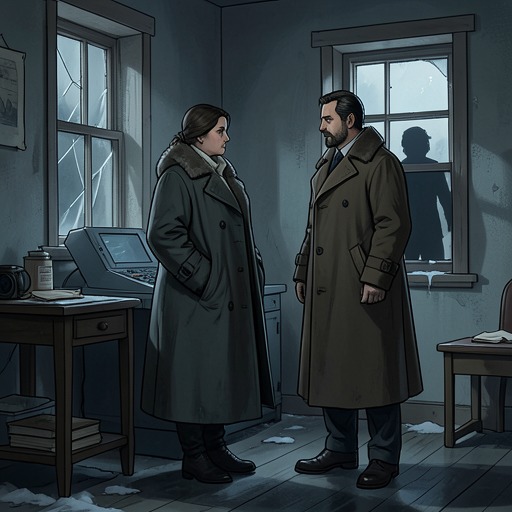
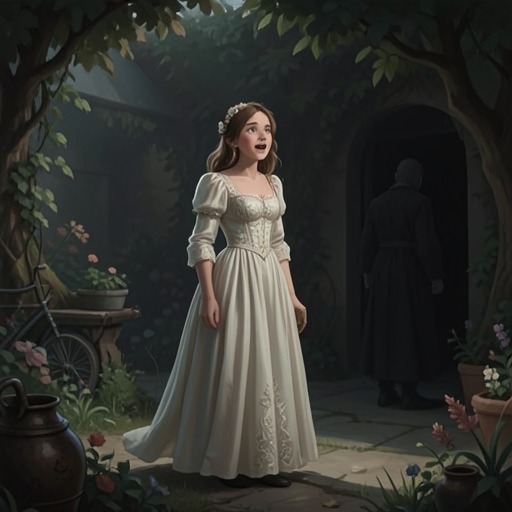
The escape unfolds on a day of violent weather that mirrors the turmoil of the household. That Friday marked the end of a month of fine days; in the evening the wind shifted from south to north-east, bringing rain, then sleet and snow, so that by the morrow the primroses and crocuses were hidden under wintry drifts and the larks were silent. It was into this bleak landscape that Isabella fled, running the whole way from Wuthering Heights, except where she 'flown,' unable to count the number of falls she had. She arrived at Thrushcross Grange out of breath and laughing, a giddiness that masked her true condition. Her hair streamed on her shoulders, dripping with snow and water; she wore only a girlish light silk frock with short sleeves, clinging wet to her body, with thin slippers on her feet and nothing on her head or neck. A deep cut under one ear, which only the cold prevented from bleeding profusely, and a white face scratched and bruised, testified to the violence she had endured. Ellen Dean, who received her, was so alarmed that she refused to stir or hear anything until Isabella had changed into dry clothes, though Isabella insisted on first ordering the carriage to take her on to Gimmerton and having a servant pack clothes from her wardrobe.
The Cause: A Marriage of Brutality
The escape was the culmination of Isabella's catastrophic marriage to Heathcliff, a union she had entered against all warnings. Her flight was precipitated by a violent confrontation in which Heathcliff, enraged by Ellen Dean's taunts about what Catherine would have suffered as his wife, snatched a dinner-knife from the table and flung it at her head. The knife struck beneath Isabella's ear, stopping her sentence mid-word, but she pulled it out, sprang to the door, and delivered a parting retort before fleeing. The last glimpse she caught of him was a furious rush, checked by the embrace of his host, Hindley Earnshaw, and both fell locked together on the hearth. In her flight through the kitchen she bid Joseph speed to his master, and knocked over Hareton, who was hanging a litter of puppies from a chair-back in the doorway. She then bounded, leaped, and flew down the steep road, quitting its windings to shoot direct across the moor, rolling over banks and wading through marshes, precipitating herself towards the beacon-light of the Grange. She declared she would far rather be condemned to a perpetual dwelling in the infernal regions than, even for one night, abide beneath the roof of Wuthering Heights again.
The Aftermath: A Ring Destroyed and a Son Born
Once safe at Thrushcross Grange, Isabella's behavior revealed the depth of her hatred and her resolve. Seated in an easy-chair on the hearth with a cup of tea before her, she insisted Ellen put 'poor Catherine's baby' away, declaring she did not like to see it. She confessed she had cried bitterly, more than any one else had reason to cry, for she and Catherine had parted unreconciled, and she would not forgive herself. But she refused to sympathize with Heathcliff, calling him 'the brute beast.' In a gesture of symbolic repudiation, she slipped the gold wedding ring from her third finger and threw it on the floor, striking it with childish spite and declaring she would smash it and then burn it, dropping the misused article among the coals. 'There! he shall buy another, if he gets me back again,' she said, fearing he was capable of coming to seek her to tease Edgar. She refused to stay, lest that notion should possess his wicked head, and she would not sue for Edgar's assistance or bring him into more trouble. Necessity alone compelled her to seek shelter there; had she not learned Edgar was out of the way, she would have halted at the kitchen, washed her face, warmed herself, and departed again to anywhere out of the reach of her 'accursed—of that incarnate goblin.' She even expressed a wish that Hindley had been Heathcliff's match in strength, so she might have seen him 'all but demolished.'
After taking tea, Isabella rose, bid Ellen put on her bonnet and a great shawl, and turned a deaf ear to entreaties to remain another hour. She stepped on to a chair, kissed Edgar's and Catherine's portraits, bestowed a similar salute on Ellen, and descended to the carriage, accompanied by her dog Fanny, who yelped wild with joy at recovering her mistress. She was driven away, never to revisit the neighborhood. A regular correspondence was established between her and Edgar when things were more settled. Her new abode was in the south, near London, where a son was born a few months subsequent to her escape. He was christened Linton, and from the first she reported him to be an ailing, peevish creature. Heathcliff, meeting Ellen one day in the village, inquired where Isabella lived; she refused to tell. He remarked it was not of any moment, only she must beware of coming to her brother, for she should not be with him if he had to keep her himself. Though Ellen gave no information, Heathcliff discovered through other servants both her place of residence and the existence of the child, yet he did not molest her. He often asked about the infant, and on hearing its name, smiled grimly and observed, 'They wish me to hate it too, do they?'
The Consolidation of Heathcliff's Power
Isabella's departure removed the last obstacle to Heathcliff's complete mastery of Wuthering Heights. The guest was now the master of the house, holding firm possession and proving to the attorney—who in turn proved it to Edgar Linton—that Hindley had mortgaged every yard of land he owned for cash to supply his mania for gaming, and that Heathcliff was the mortgagee. In that manner Hareton, who should now have been the first gentleman in the neighborhood, was reduced to a state of complete dependence on his father's inveterate enemy, living in his own house as a servant, deprived of the advantage of wages, quite unable to right himself because of his friendlessness and his ignorance that he has been wronged. Heathcliff's wealth, which Ellen noted was beyond anyone's knowing and increased every year, made him rich enough to live in a finer house, yet he remained close-handed, preferring to let Thrushcross Grange to a good tenant for a few hundred more rather than flit there himself. His design, as he later revealed, was to have the two cousins, Catherine Linton and his son Linton, fall in love and get married, so that his young chit would be provided for at once as joint successor with Linton, and to prevent disputes over the property, he was resolved to bring about their union. Edgar Linton, divining that one of his enemy's purposes was to secure the personal property as well as the estate to his son, or rather himself, felt his will had better be altered, putting Catherine's fortune in the hands of trustees for her use during life and for her children after her, so that it could not fall to Heathcliff should Linton die.
Narrative Role and Significance
Isabella's escape is a watershed in the novel's structure, marking the end of her active role and the beginning of the second generation's tragedy. Her flight is narrated retrospectively by Ellen Dean to Mr. Lockwood, framed within the larger story of Heathcliff's revenge. The event also resonates with the novel's Gothic and supernatural elements. Isabella's terror of Heathcliff, whom she calls an 'incarnate goblin,' prefigures the haunting that will later define the Heights. The violence of her departure—the knife wound, the flight through the storm—contrasts sharply with the domestic order of Thrushcross Grange, which she can only visit as a fugitive. Her son Linton, born in the south, becomes the instrument of Heathcliff's revenge against Edgar, a sickly pawn in the scheme to seize the Grange's property. Isabella's escape thus sets in motion the chain of events that leads to Catherine Linton's captivity and forced marriage, and ultimately to the reconciliation of the second generation only after Heathcliff's own death. Her story, told with a mixture of horror and grim satisfaction, underscores the novel's themes of imprisonment, cruelty, and the destructive power of revenge, while her final act of burning her wedding ring stands as a defiant rejection of the bonds that held her.